
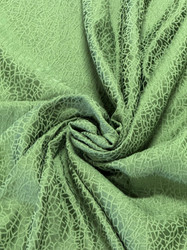
Understanding Jacquards, Brocades, Damasks, and Related Woven Fabrics
Dec 12th 2025
If you’ve ever shopped for decorative or statement fabrics, you’ve likely encountered terms like jacquard, brocade, and damask. These words are often used interchangeably, and on our website, they are placed in one category; however, they don’t mean the same thing. They describe different weaving techniques and fabric traditions, not specific fibers like cotton or silk.
This guide breaks down what each fabric truly is, how they relate to one another, and how to choose the right one for apparel or drapery.
Jacquard: The Foundation Technique
Jacquard refers to a weaving method, not a fabric style. A jacquard fabric is produced on a Jacquard loom, which allows each warp thread to be individually controlled. This enables the creation of complex, intricate patterns—florals, geometrics, pictorial scenes, or abstract designs—directly woven into the fabric rather than printed or embroidered.
Key characteristics:
-
Patterns are woven, not surface-applied
-
Often reversible, though the front is more defined
-
Can be made from cotton, silk, wool, viscose, polyester, or blends
-
Texture ranges from subtle to highly dimensional
Common uses:
-
Apparel (jackets, skirts, dresses)
-
Drapery and panels
-
Decorative accents
Brocade: Rich, Raised, and Ornamental
Brocade is a jacquard fabric known for its raised, highly decorative patterns.
Traditionally woven with silk and often enhanced with metallic threads, brocade has long been associated with luxury and ceremonial use. The design typically appears embossed or floating above the background fabric.
Key characteristics:
-
Raised or floating pattern areas
-
Dense, structured hand
-
Usually non-reversible
-
Historically floral or baroque motifs
Common uses:
-
Statement garments
-
Eveningwear and formal apparel
-
Decorative drapery
Brocade excels when visual impact and texture are the priority.
Damask: Elegant, Flat, and Reversible
Damask is another jacquard weave, distinguished by its smooth surface and reversible design. Instead of raised elements, damask relies on the contrast between satin and matte weaves to create pattern. The design is visible through light reflection rather than texture.
Key characteristics:
-
Flat, smooth finish
-
Reversible (pattern appears inverted on the back)
-
Typically single-color designs
-
Crisp and refined appearance
Common uses:
-
Table linens and drapery
-
Refined apparel
-
Interior textiles where subtle elegance is desired
Damask is ideal when you want pattern without bulk or heaviness.
Other Related Woven Fabrics
Matelassé
A jacquard fabric designed to mimic quilting. The pattern appears padded or stitched, though it is woven in a single layer.
-
Soft, sculptural texture
-
Common in coverlets, light drapery, and apparel accents
Tapestry
A heavy jacquard weave featuring pictorial or scenic designs.
-
Dense and structured
-
Often narrative or illustrative
-
Used primarily for wall hangings and decorative panels
Cloqué
A jacquard fabric with a permanently puckered or blistered surface.
-
Textural contrast between raised and flat areas
-
Lightweight versions are popular in fashion garments
How to Choose the Right Fabric
When deciding between these fabrics, consider pattern depth, weight, and end use:
-
Choose jacquard for versatility and broad design options
-
Choose brocade for bold, luxurious statements
-
Choose damask for subtle elegance and reversibility
-
Choose matelassé or cloqué when texture is the focal point
Also remember that fiber content matters: the same weave behaves very differently in cotton versus silk or viscose.
Final Thoughts
Brocade and damask are types of jacquard weaves. All brocades and damasks are jacquards, but not all jacquards are brocades or damasks. Jacquards, brocades, and damasks are best understood as part of a woven hierarchy rather than isolated categories. Jacquard is the enabling technology; brocade and damask are stylistic expressions of it. Understanding these distinctions helps you choose fabrics with confidence—whether you’re designing garments, selecting drapery, or building a thoughtfully organized fabric collection.